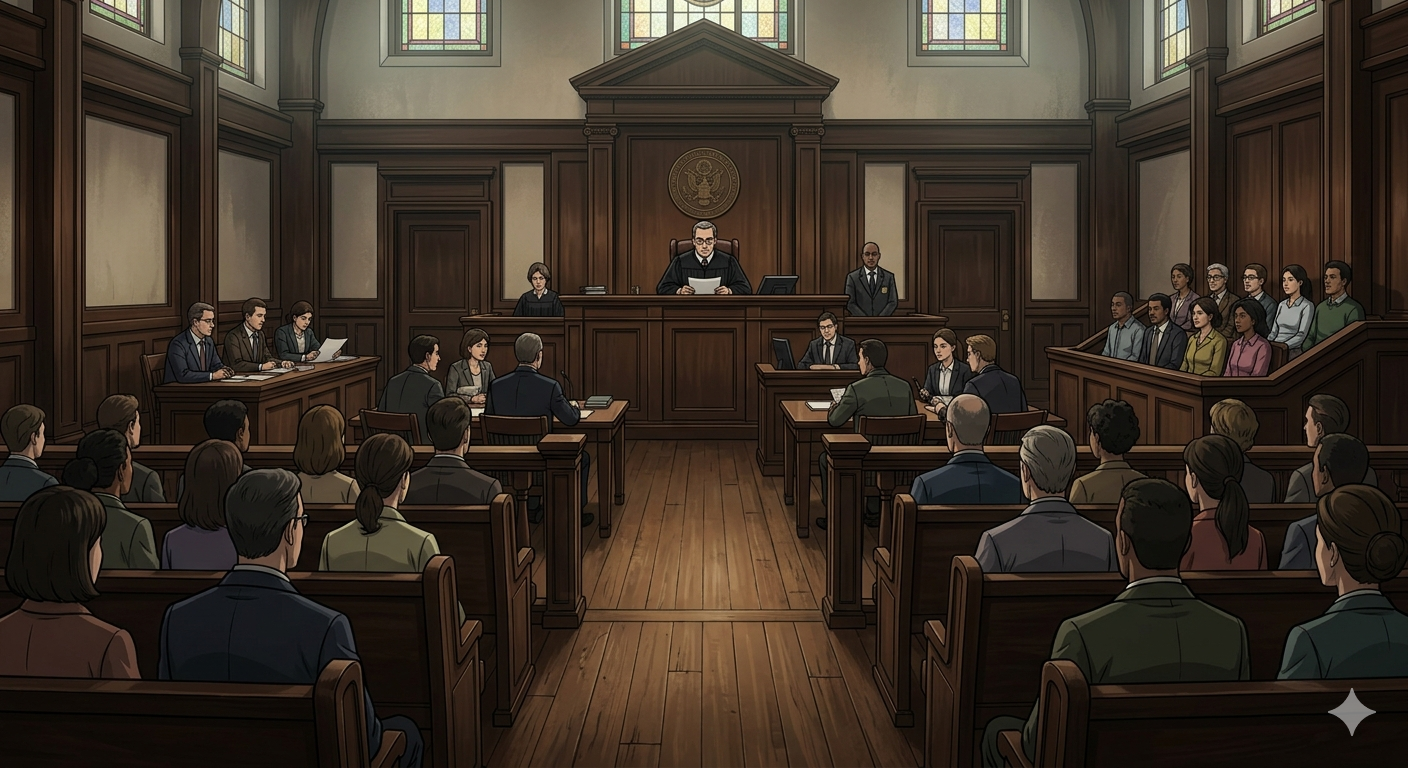

A Guide to the Court
Welcome, Your Honor. Every feature that comes before this court follows the same solemn process. Here's how justice is served.
File a Case
Start by filing the product decision you're wrestling with. The court needs four things:
- The Proposal — What are you thinking of building? Be specific.
- The Audience — Who is this for? Users, customers, internal teams?
- The Timing — Why now? What makes this the right moment?
- The Tradeoff — What are you sacrificing? Time, money, another feature?
The Arraignment
The bailiff calls the court to order. The charge is read aloud: your proposal stands accused of insufficient evidence, questionable timing, and unacceptable opportunity cost. A gavel strikes. The trial has begun.
The Prosecution
The prosecution makes their case against your feature. They attack the proposal with pointed arguments — questioning user demand, the strategic timing, and whether the tradeoff is worth it. Every product decision has a dark side, and the prosecution is here to expose it.
The Defense
The defense rises to counter. They argue that doing nothing is the real risk, that your audience needs this even if they haven't asked for it yet, and that the tradeoff is a calculated bet worth taking. The courtroom dynamic shifts.
Cross-Examination
The judge presses deeper. Tough questions cut through the rhetoric, forcing you to confront the real-world implications of your decision. No arguments — just honest answers to uncomfortable questions.
The Verdict
Now you decide. From the bench, you have four paths:
Ship It
Full speed ahead.
Kill It
Stop. Not the right move.
Send Back
Revise and resubmit.
Mistrial
Need more data.
Whichever you choose, the court delivers a full ruling with real risks, ignored arguments, and a test-first action plan. Your verdict is recorded in the Hall of Verdicts for posterity.
“Justice is the constant and perpetual will to allot to every product decision its due.”
File Your First Case